My child keeps blinking and rubbing their eyes: is it allergy or tiredness?
Frequent blinking, eye rubbing and redness around the eyes in a child may be allergic conjunctivitis, or it may be linked to eye strain or ingrown eyelashes. This article helps parents tell the difference at first, and gives guidance on eye rest, environmental control and when to see a doctor.
Review status: automated publication checks completed. No named medical-professional review is declared. Editorial and review policy
If your child blinks and rubs their eyes often, first look at these signs
Your child has been blinking and rubbing their eyes a lot lately. The whites of the eyes look a little red, and the skin around the eyes is red and wrinkled from rubbing. Parents should not rush to scold them for a "bad habit" — this is often a sign that the eyes feel uncomfortable. There are several common causes: allergy, eye strain, ingrown eyelashes and others.
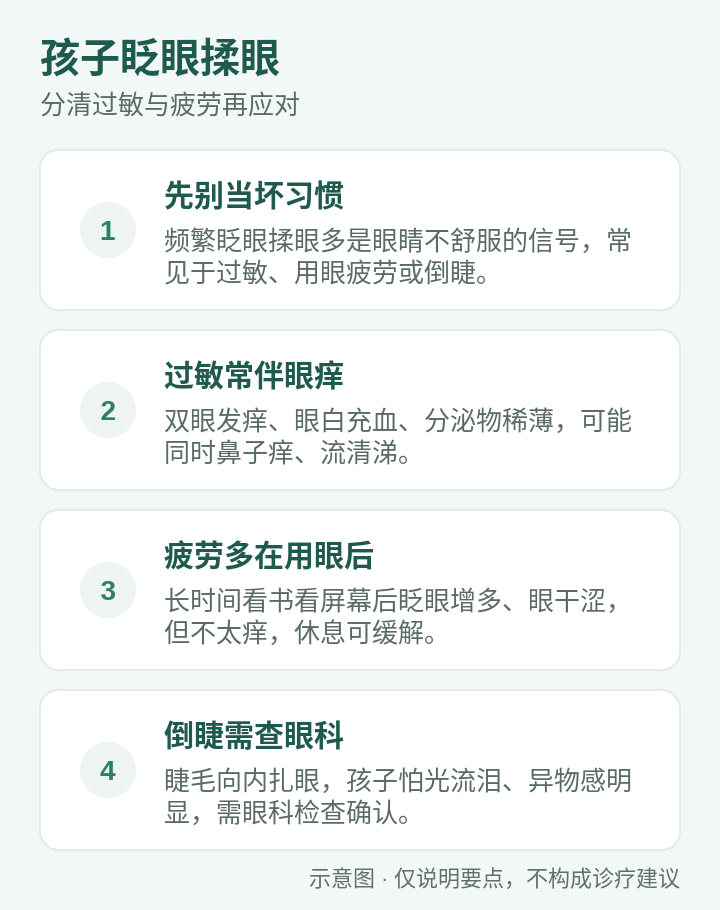
The typical sign of allergic conjunctivitis is itching in both eyes, and the child cannot help rubbing them. The whites of the eyes become bloodshot, sometimes the eyelids swell, and the discharge is mostly thin and watery. Many children also have an itchy nose and clear runny nose, or it happens to be pollen season or they have been in contact with soft toys or pets.
Eye strain is mostly seen after long periods of reading or looking at screens. The child blinks more and the eyes feel dry, but usually there is not much itching, and it eases after rest. With ingrown eyelashes, the lashes turn inward and scratch the eyeball. The child may be sensitive to light, have watery eyes and a clear feeling of something in the eye, and an eye examination is needed to confirm it.
First do three things: cold compress, rest, and less eye rubbing
Whatever the cause, rubbing the eyes makes things worse. Rubbing makes the eyelid skin red and swollen, and can also carry bacteria into the eyes. You can first have your child close their eyes and apply a clean cool towel to the eyelids for a few minutes each time. This can help ease itching and swelling.
If it is allergy, a cold compress and avoiding the allergen are often more helpful than rubbing. When the eyes itch, apply a cool towel to the closed eyes for 5 to 10 minutes, and this can be repeated several times a day. At the same time, remind your child not to rub with their hands. If it really itches, they can close their eyes and gently press on the eye socket.
If it is eye strain, arrange rest. After 20 minutes of looking at a screen or reading, look up at something far away for at least 20 seconds. Keep indoor lighting soft, do not make the screen too bright, sit upright, and keep the eyes about one chi (around 30 cm) from the book.
Environmental control at home to reduce contact with allergens
If allergy is suspected, environmental control is the basis. During pollen season, reduce the time windows are open. After going out and coming home, wash hands and face and change outer clothes. Wash bed sheets and duvet covers regularly in hot water. Keep soft toys away from the head of the bed. Carpets and cushions easily collect dust, so try to keep them clean.
House dust mite and pet dander are common sources of year-round allergy. Do not let bedroom humidity get too high. Air bedding in the sun often, and vacuum pillows and mattresses regularly. If you have pets at home, try not to let them into the bedroom, wash hands promptly after contact, and do not rub your eyes with dirty hands.
These measures cannot replace a doctor's judgement, but they can reduce your child's chances of contact with allergens and help ease itchy eyes.
When should you see a doctor? Remember these signs
Most allergic conjunctivitis does not affect vision, but some situations need an eye doctor's assessment. If the following signs appear, do not handle it yourself — see a doctor as soon as possible:
If the eyes are clearly sensitive to light, tears keep flowing, or the child says things look blurry, see an eye doctor as soon as possible. Eye pain, clearly red and swollen eyelids, or discharge that turns yellow and thick may mean an infection, and a doctor also needs to judge this.
If your child's frequent blinking and eye rubbing lasts more than one or two weeks and does not improve after rest and environmental changes, or if only one eye is affected, it is recommended to see a doctor to check for ingrown eyelashes, refractive problems or other eye diseases. For children with a history of eczema, asthma or seasonal allergy, pay extra attention when symptoms get worse in spring.
Do not buy eye drops on your own; keep a simple daily record
Parents should not use eye drops for their child on their own, especially those containing steroids or antibiotics. The treatment is completely different for different causes, and using the wrong one may hide the condition. The doctor will decide based on the examination results whether anti-allergy eye drops or other treatment are needed.
In daily life, you can keep a simple record: when your child blinks and rubs their eyes more, what they were doing at the time, whether they had contact with pollen or pets, whether the eyes were red, and whether there was discharge. This information is helpful for the visit and can also help parents spot patterns.
Allergic conjunctivitis tends to come back. The key is to reduce contact with allergens and deal with symptoms promptly. For most children, symptoms can be controlled quite well as they grow older and with proper management.
This article is for general information only and is not medical advice. Please follow your doctor's instructions.
Reference links
This article is for general information only and is not medical advice. If your symptoms affect daily life, please see a doctor.