Wearing a mask during pollen season: how well it blocks pollen, how to get a good fit, and what to do with it afterwards
Explains how masks block pollen and where they fall short, why fit matters more than material, what to do with a mask after you come in from outside, and why a mask cannot replace proper treatment.
Review status: automated publication checks completed. No named medical-professional review is declared. Editorial and review policy
Can a mask block pollen? Start with particle size and gaps
Pollen grains are not extremely small, and most can be partly blocked by a mask's filter material. But what really decides the effect is often not how advanced the filter is, but whether there is a gap between the mask and your face.
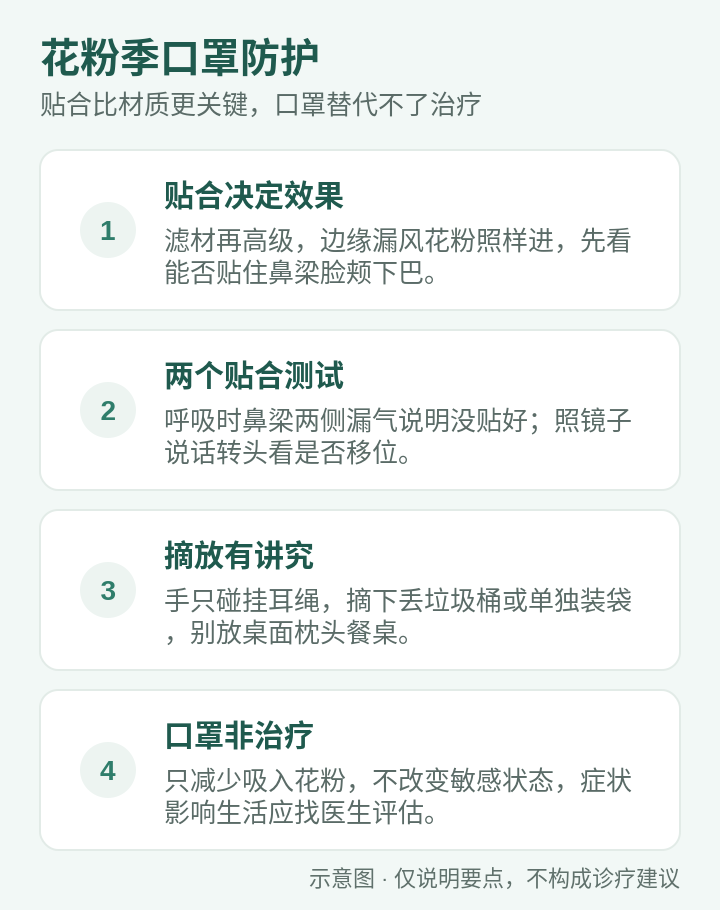
When air leaks around the edge of the mask, it goes around the filter, and pollen comes in through the gap too. So when choosing a mask, first check whether it sits snugly against the bridge of your nose, your cheeks and your chin, rather than looking only at the stated filtration rating.
Ordinary gauze masks and cloth masks can block some large particles, but they usually fit poorly. For everyday pollen protection, a mask with a good fit is enough; you do not need a special model.
How to tell if it fits? Do two quick tests after putting it on
Breathe normally after putting it on. If you feel air leaking from the sides of the nose bridge or the edges of your cheeks, the fit is not good enough. You can adjust the nose clip and press the metal strip into a shape that fits your nose bridge.
Another way is to talk, turn your head and look down in front of a mirror, and see whether the mask clearly shifts. Children have small faces, and adult sizes are often too big, so when choosing a mask for a child, make sure the edges do not leak air and do not press on the eyes.
Try not to breathe through your mouth while wearing a mask. Pressing the nose clip tight and covering your chin can reduce pollen coming in from above. Glasses fogging up often also suggests the nose bridge is not pressed down properly.
When you come back from outside, how to take off and store the mask
After getting home, take off the mask at the door first. Touch only the ear loops, not the outer layer. Take it off and throw it straight into the bin, or put it in a separate bag. Do not leave it on the table, pillow or dining table.
If you need to use it once more that day, you can hang it in a ventilated place to air, fold it with the inside facing in, and put it away. If the mask gets damp, misshapen or contaminated, it should be replaced with a new one.
Before going inside, take off your coat in the entrance area too, then wash your hands and face. Pollen sticks to hair and clothing, and a mask alone cannot block all of it.
Beyond masks, a few other easy things you can do
When pollen levels are high, try to keep windows closed and avoid staying on grass or under trees for long. Wear sunglasses that cover the area around your eyes when you go out, and shower and change clothes after getting home. These can all reduce the pollen brought indoors.
Wipe dust indoors regularly with a damp cloth and vacuum often; this is less likely to stir up pollen than dry dusting. Do not hang clothes outside to dry, and you can also wipe your pet's fur when it comes back from outside.
These measures are supportive, not a replacement. A mask only works while you wear it, and protection ends when you take it off, so cleaning up your environment matters just as much.
When to see a doctor
Masks and everyday precautions can only reduce exposure; they cannot remove symptoms. If a blocked nose, runny nose or itchy eyes are already affecting sleep, school or work, you should see a doctor for an assessment.
If you notice any of these signs, do not just put up with them: symptoms last for weeks without easing; symptoms do not improve after using medicine bought at a pharmacy according to the instructions; wheezing, chest tightness, or shortness of breath after activity; or eyes that are clearly red and swollen and painful, or changes in vision.
Children with a long-standing blocked nose can easily develop ear discomfort. If parents notice a child repeatedly rubbing their nose or eyes or breathing through the mouth, it is also worth taking the child to see a doctor. How to manage it specifically needs a doctor's judgement based on the person's situation.
A mask is not treatment; do not treat it as a substitute
Symptoms in pollen season come from the immune system's reaction to pollen. A mask only reduces the amount of pollen entering the nose. It can make you feel more comfortable, but it does not change your body's sensitive state to pollen.
Proper treatment usually includes avoiding exposure, using medicines as advised by a doctor, and for some people, assessing whether a longer-term treatment plan is needed. All of this needs a doctor to judge based on symptoms and tests.
If symptoms come back at the same season every year, it is recommended to see a doctor for an assessment before pollen season, rather than waiting until you feel bad and then looking for a quick fix. However well you wear a mask, it cannot replace this step.
This article is for general information only and is not medical advice. Please follow your doctor's instructions.
Reference links
This article is for general information only and is not medical advice. If your symptoms affect daily life, please see a doctor.