Amino Acid Formula vs Extensively Hydrolysed Formula: Differences, Taste and Rules for Switching
Special formula milks come in two types: amino acid formula and extensively hydrolysed formula. This article explains the differences, when each is used, how well children accept the taste, and stresses that switching must be guided by a doctor. Do not buy and try them on your own.
Review status: automated publication checks completed. No named medical-professional review is declared. Editorial and review policy
Amino acid formula and extensively hydrolysed formula: the difference is how finely the protein is broken down
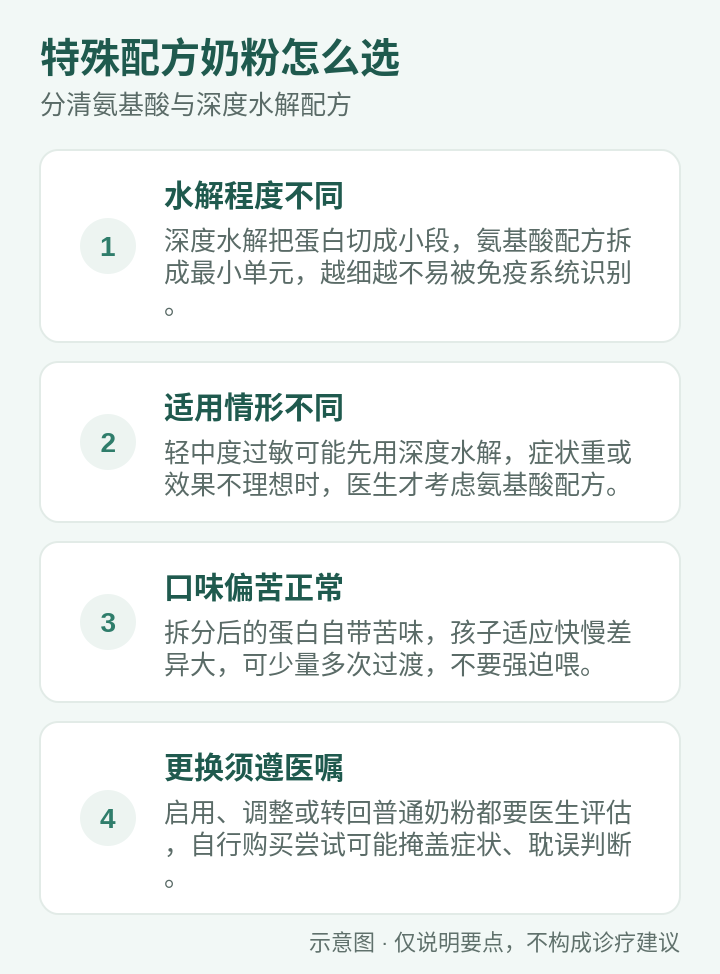
The protein in ordinary formula milk is made of whole, large molecules. Extensively hydrolysed formula breaks the protein into short pieces. Amino acid formula breaks it down further, into the most basic amino acid units. You can think of it this way: one is cut into short pieces, the other is taken apart down to the smallest unit.
For a child with cow's milk allergy, the more finely the protein is broken down, the less likely the immune system is to recognise it. So amino acid formula is usually used for children whose situation is more complex, for example when extensively hydrolysed formula still does not control the symptoms.
When a doctor may consider this kind of formula
Special formula milk is not an everyday nutritional upgrade. It is a way of managing the diet in cow's milk allergy. The doctor will decide whether it is needed, and which type, based on the child's type of symptoms, how severe they are, age and growth.
For mild to moderate cow's milk allergy, the doctor may first consider extensively hydrolysed formula. Amino acid formula may only be used when symptoms are severe, when several foods cause allergy at the same time, or when extensively hydrolysed formula does not work well. This judgement needs a professional assessment. It is hard for parents to work out on their own.
The taste is somewhat bitter and acceptance varies from child to child; do not force-feed
Extensively hydrolysed formula and amino acid formula often taste slightly bitter. This taste comes naturally from breaking the protein apart. Some children get used to it within a few days. Others need longer. Individual differences are large.
You can try small amounts more often and a slow transition, but do not force-feed. If the child keeps refusing it, or weight gain is not as expected, talk to the doctor promptly rather than switching back to ordinary formula on your own.
Switching formula must be guided by a doctor; do not buy and try it on your own
The choice and switching of special formula milk needs to be decided by a doctor together with the child's specific situation. If parents buy and try it on their own, it may hide the real symptoms and may also delay the judgement.
If the child is using a special formula and you want to adjust it or change back to ordinary formula, this should also be done under the doctor's guidance. Usually a period of observation is needed to confirm the symptoms do not come back. Starting and switching special formula milk should both be decided by a doctor after assessment.
When to see a doctor: these warning signs
If after eating the child has swelling of the lips, face or eyelids, fast breathing, wheezing, a tight throat, difficulty swallowing, blue or pale skin, or is listless and slow to respond, these may be signs of anaphylaxis. If there are abnormal signs in breathing or circulation, seek medical care at once or call 120 (the emergency number in China).
You should also take the child to see a doctor if there are repeated rashes, diarrhoea, vomiting, blood in the stool, slow weight gain, or if parents suspect cow's milk is involved. The doctor will decide whether further tests or a change in diet are needed.
This article is for general information only and is not medical advice. Please follow your doctor's instructions.
Reference links
This article is for general information only and is not medical advice. If your symptoms affect daily life, please see a doctor.